
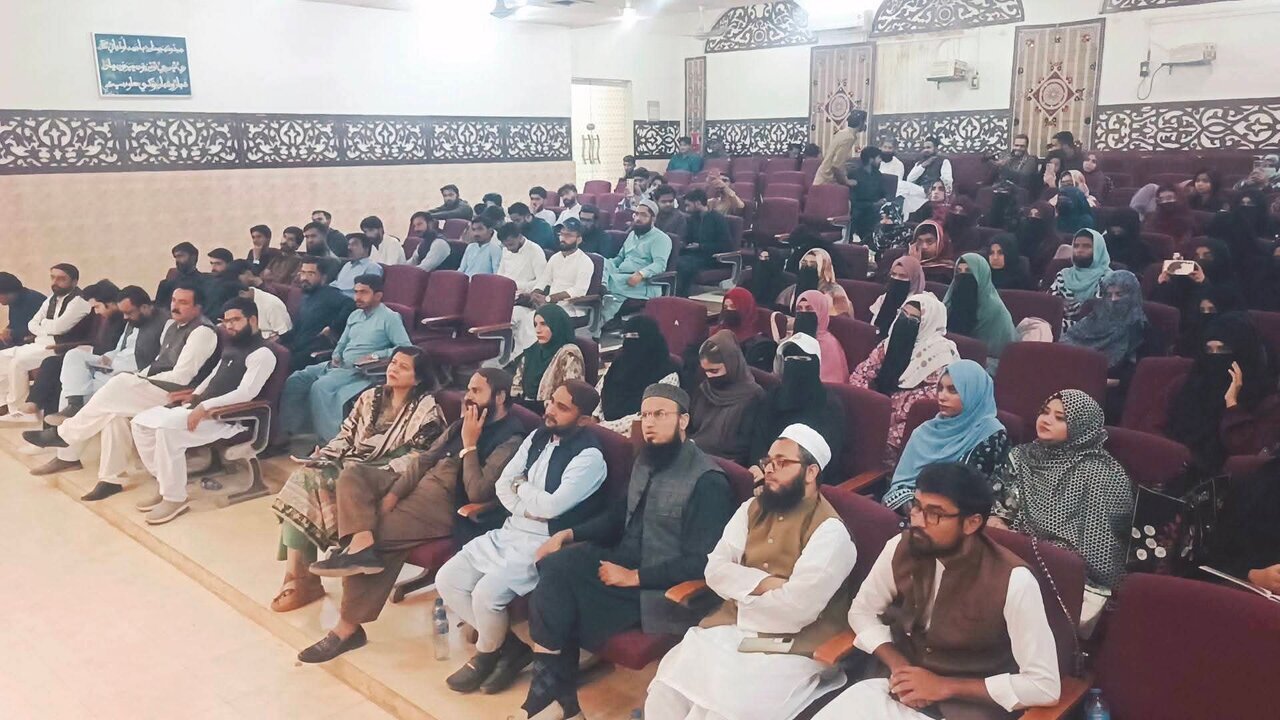
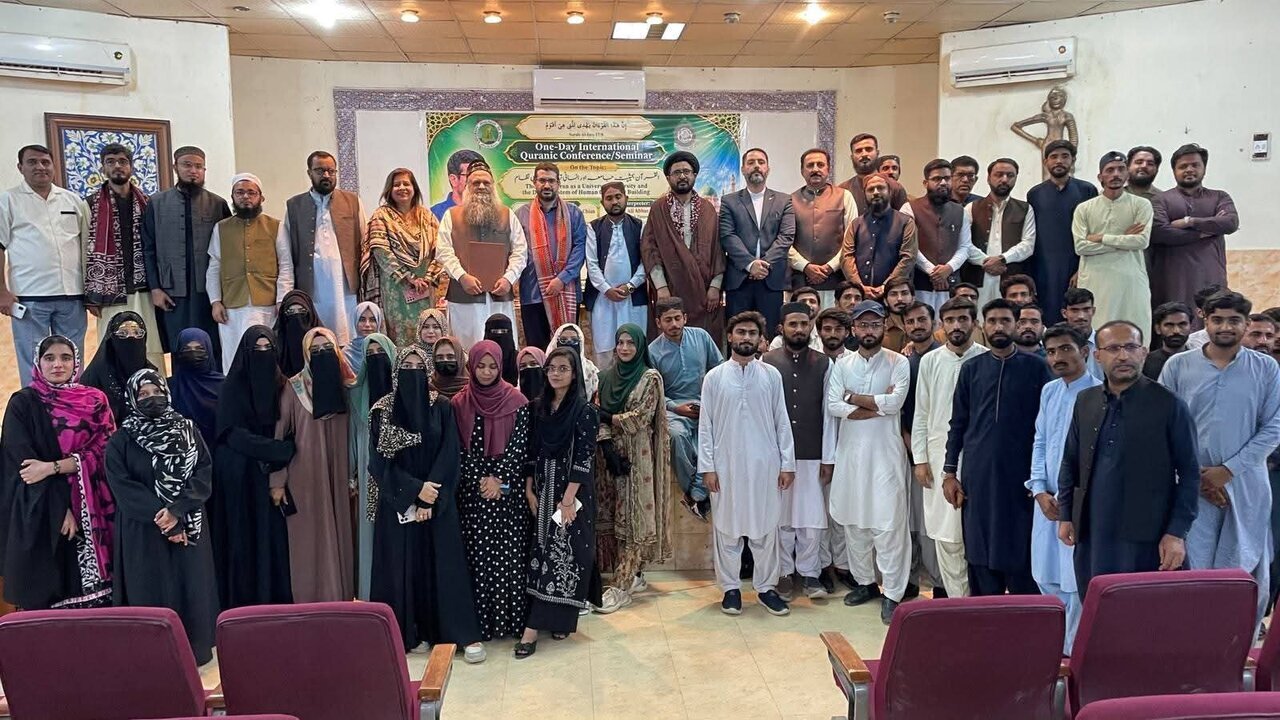
AhlulBayt News Agency: A one-day international Quranic seminar titled “The Holy Quran as a Universal University and a Divine System for Building Human Character” was organised at the University of Sindh, Jamshoro, Pakistan. The event witnessed significant participation from researchers, scholars, academics and students from Pakistan and abroad.
The seminar was organised by the Department of Comparative Religion and Islamic Culture at the University of Sindh, in collaboration with Idara Hifz-e-Quran Siratullahi, Hyderabad, at the Pir Hussamuddin Rashdi Institute of Sindhology, University of Sindh, Jamshoro.
The keynote speaker was Professor Dr Mohammad Baqir Chitciyan of the University of Tehran.
Addressing the gathering, he said that the Holy Quran remains as comprehensive and beneficial a guide for human life today as it was during the time of Prophet Muhammad (peace be upon him). He described the Quran as a complete and universal university that provides guidance on human development, character building, knowledge, research, ethics and solutions to the challenges of life.
He further stated that those seeking relief from anxiety, distress and illness must return to the teachings of the Quran. He said the Quran guides individuals towards honesty, trustworthiness, patience and service to humanity.
He emphasised the need to integrate Quranic research with modern sciences and other academic disciplines in educational institutions and universities.
Iran-Pakistan Educational and Cultural Ties
Special guest Dr Saeed Hashmi, Cultural Counsellor at the Consulate General of the Islamic Republic of Iran in Hyderabad and Director of its Cultural Centre, said that the Quran serves as a unifying force among Muslims and that the people of Iran and Pakistan share a common bond through their love for the Holy Quran.
He observed that such academic gatherings could play an important role in further strengthening educational and cultural relations between the two countries.
He also referred to the views of the martyred Leader Ayatollah Sayyid Ali Khamenei on reciting the Quran, understanding its meanings, reflecting on its teachings and putting them into practice.

Universities Urged to Promote Quranic Research
Another distinguished guest, Professor Dr Hafiz Munir Ahmed Khan, Dean of the Faculty of Islamic Studies at the University of Sindh, said that promoting Quranic research and education was among the fundamental responsibilities of educational institutions and universities.
He urged universities to undertake contemporary research in the light of Quranic teachings so that younger generations could acquire not only knowledge but also the ability to translate that knowledge into practice.
Dr Nahid Arain, the chief organiser of the seminar and Chairperson of the Department of Comparative Religion and Islamic Culture, said that solutions to human problems and difficulties could be found through adherence to the Holy Quran and the Sunnah of Prophet Muhammad (peace be upon him).
She observed that homes, societies and institutions that follow the teachings of the Quran and Sunnah develop an environment of peace, tranquillity, love and progress.
Call for Regular Quranic Academic Programmes
Syed Zahid Ali Kazmi, Director of Idara Hifz-e-Quran Siratullahi, expressed gratitude to chief organiser Dr Nahid Arain and her entire team, particularly Associate Professor Abdur Rahman, the Dean of the faculty and especially Vice Chancellor Professor Fateh Muhammad Mari, for their support in organising the event.
He suggested that if seminars focused on reflection and contemplation of the Quran were organised even once a month, university students could develop a stronger academic and intellectual understanding of Quranic thought.
He further said that reciting and listening to the Holy Quran was a means of seeking the continuous outpouring of divine mercy.
A special question-and-answer session was also held during the seminar, allowing participants to raise various academic and research-related questions.
At the conclusion of the programme, traditional Sindhi customs were observed as guests were presented with Ajrak, Sindhi caps and lungis. Shields were also distributed among speakers and participants as commemorative souvenirs.




Your Comment